ELM'S MARK PARIANI TAKES US TO DUBAI FOR THE WORLD EXPO
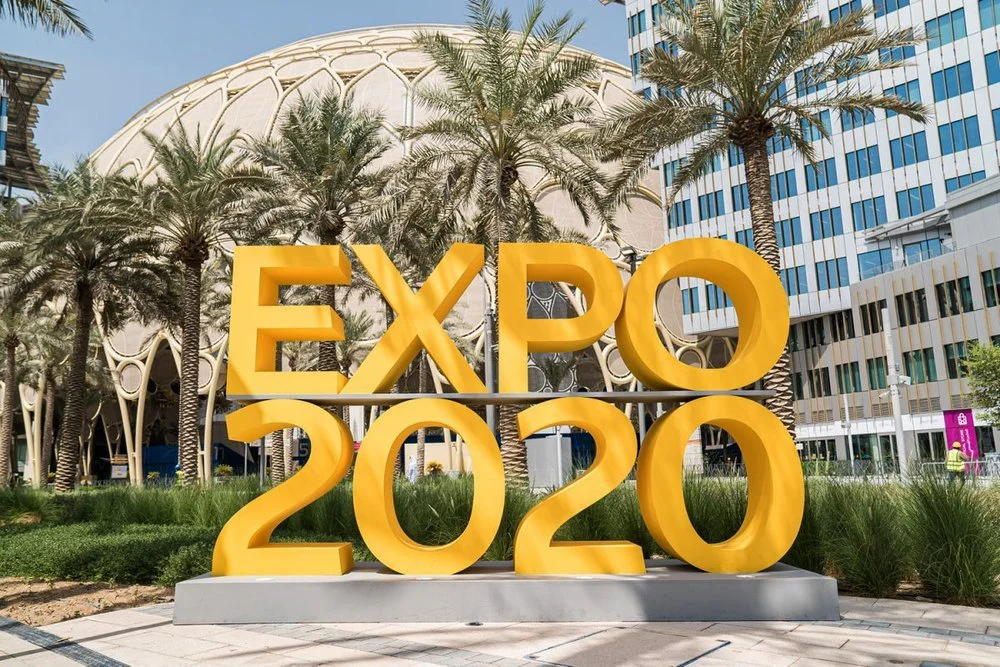
The mission of the World’s Fair/Expo has always been to highlight the outstanding achievements of nations and introduce innovations that can help shape our world. Some of the greatest inventions and iconic structures have debuted at World Expos, such as the first television broadcast; the first cellular phone; the Eiffel Tower in Paris, France; and the Seattle Space Needle. Expos have been circling the globe for hundreds of years, celebrating the power of collaboration and unity. The latest Expo was held in Dubai, UAE (United Arab Emerits) from October 1st, 2021 - March 31st, 2022. ELM Associate, Mark Pariani, was fortunate enough to attend. Below, he shares his experience and some of the event’s most impressive showcases.
Expo 2020 was easily one of the most impressive venues one can visit and left me nothing less than inspired to make a difference in the world. The theme for this Expo was Connecting Minds, Creating the Future and boasted one of the largest country participations of any World Expo with 192 country pavilions. In addition, there were three featured pavilions themed Opportunity, Sustainability, and Mobility. While most of the country pavilions will be dismantled and returned to their host countries, these three were built to last and will become science and learning centers, post-Expo.
The center of the site is home to the Al-Wasl Dome. It is the tallest structure at the Expo and acts as a visual compass as it can be seen from most vantage points around the site. The structure is the world’s largest 360-degree projection dome and held nightly light shows that are breathtaking to behold. During the Expo, the dome hosted several internationally renowned musicians on the center stage with accompanying projection.

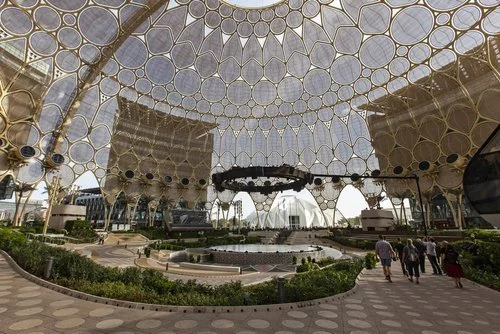
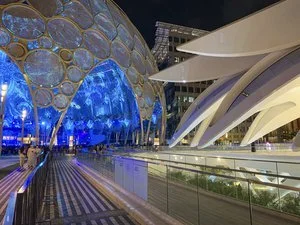
Fanning outward from the Al-Wasl Dome, the entire site of the Expo was expertly designed with all areas smoothly connected. Walking paths were easily accessible, and wayfinding was intuitive and legible. Shade structures were readily available and made a significant difference when trying to beat the heat of the desert sun. They even integrated free public water fountains and anti-fatigue walking surfaces into the main circulation paths for the comfort of Expo guests. As an English-speaking person, navigating the site was a breeze as almost all signage was printed in English as well as Arabic.

The site was split into five distinct zones with three zones following the themes of the featured pavilions. The other two zones, Jubilee and Al Forsan, featured wide public plazas and stages for nightly performances. The country pavilions were wrapped around the perimeter of the site. One stand-out exhibition, The Netherlands in the Sustainability zone, constructed their entire pavilion using recycled material with a vertical garden in the center. They also rented and plan to return their pavilions structural metal at the Expo’s conclusion, making theirs the most sustainable of the entire Expo.
Most pavilions acted as an introduction to what that country had to offer. Anything from medical and technological advancements to great opportunities for travel. Germany debuted an idea for a flying car that you can reserve on your phone much like a taxi or Uber. Singapore showed several ideas for vertical farming and sustainable agriculture. China showed how it is building an expansive interconnected train system that will allow greater mobility for its citizens. New Zealand explained how it recently declared an important river as a legal person which gave it the same rights as a citizen thus protecting it for future generations. Japan showcased an entire collection of work from popular miniature artist Tanaka Tatsuya. The USA celebrated innovations in space exploration and even had a replica SpaceX Falcon 9 rocket.
World renowned Spanish architect, Santiago Calatrava, designed the pavilion for the host country, UAE. It was inspired by the shape and wings of a falcon, the national bird of the UAE and Middle East. The “wings” of the falcon opened during the day to collect sunlight on solar panels underneath. The interior was just as stunning, featuring a fully realized walkable exhibit of the country’s formation, which celebrates its 50th anniversary this year. It ended with a theatrical experience like no other. Once seated, the entire bay of seats gradually and smoothly ascended while the audience viewed an elegant animation depicting the history of the nation. It was simply awe-inspiring.
The entire experience was a masterclass in design and planning, and any visitor interested in architecture and technology is sure to be greatly inspired. For those considering attending, the next World Expo will be in Osaka, Japan in 2025. I recommend you start planning now!